Clay Instagram carousel style
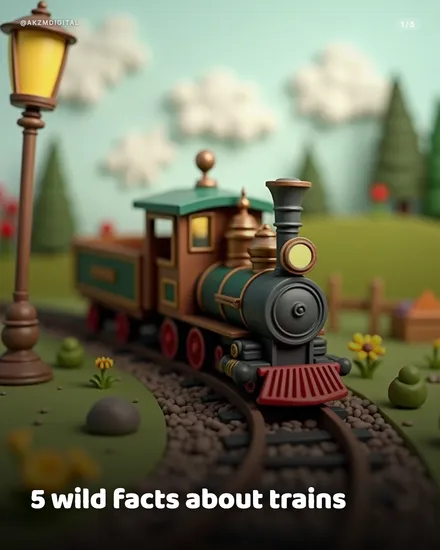
Clay renders every object as though it were sculpted from modelling clay and photographed on a tabletop set. In this slide, a green and copper steam locomotive rolls along a dirt track with the soft, rounded edges and matte, slightly fingerprinted surface of Plasticine. Look at the details: the chimney has a squashed, hand-pressed look, the red cowcatcher at the front sits like a wedge of pushed clay, and the ballast between the rails is a scatter of tiny brown crumbs that read as real grit. Behind it, chubby white clouds float on a flat teal sky, conical fir trees stand like thumb-shaped blobs, and a lit lamp post glows warm yellow on the left. The whole scene carries a shallow depth of field, so the background trees and fence blur while the train stays crisp, which is the classic trick of macro stop-motion photography. Colours are muted and toy-like: forest greens, earth browns, a pop of yellow wildflowers. The mood is gentle, playful and nostalgic, the aesthetic lineage of Aardman claymation, Lego-scale dioramas and children's picture books built from real physical models. The type is deliberately plain, a chunky white rounded sans at the base reading '5 wild facts about trains', with a small handle credit top-left and a slide counter top-right. It stops the scroll because the brain double-takes: this looks handmade and tactile, not rendered, and that warmth reads as effort. Nothing here is sharp or corporate. Every surface invites you to imagine pressing it with a thumb. It suits explainers and light educational content where a friendly, low-stakes tone lets people learn something without feeling lectured, and where a single hero object can carry the whole frame.
Best for
One clay hero object per slide, never a crowd
The train works because it is the single sculpted star, framed by soft blurred trees and a lamp post that support rather than compete. Clay renders best when one object owns the centre and everything else falls back into that shallow-focus haze. Cram three or four detailed models into a frame and the tabletop illusion collapses, because real stop-motion sets never pack that much crisp detail into one shot. Pick the noun your slide is about, sculpt that, and let the rest go soft and simple around it.
The crumbs and fingerprints are the whole point
Notice the loose grit scattered on the track, the matte pressed-thumb texture on the chimney, the way the clouds look genuinely lumpy. That imperfection is what sells clay as physical rather than digital. If you clean it up, smooth every edge and remove the stray crumbs, you land in generic 3D render territory and lose the handmade warmth entirely. When you brief this look, keep the visible tool marks and slight wonkiness. Perfection is the enemy here.
Wrong for anything that needs to feel authoritative
Clay is warm, toy-like and gently childish, which is a gift for fun facts and beginner explainers and a liability everywhere else. Financial advice, medical claims, hard news, luxury products or B2B thought leadership all fight this aesthetic, because a Plasticine train undercuts the seriousness you are trying to project. If your content needs the reader to trust your expertise or open their wallet for something premium, this friendly, unserious surface works against you. Save it for topics where charm beats gravitas.