Cinematic Instagram carousel style
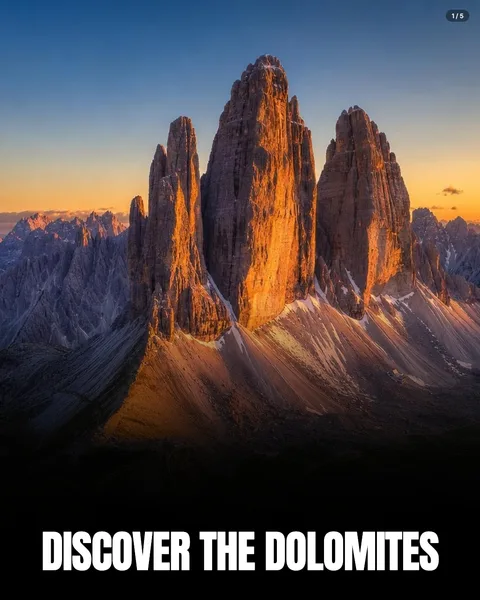
Cinematic renders your subject as a wide, sweeping landscape shot at the edge of daylight. In this example, the three peaks of the Dolomites catch the last warm light of sunset, their west faces glowing amber and rust while the shadowed rock falls into cool blue. Behind them a graduated sky runs from deep navy at the top down through orange to a pale gold band on the horizon, the kind of tonal ramp you get for a few minutes at golden hour and no longer. The composition is generous with air, mountains sitting low and central, sky given real room above. Below the image, a heavy condensed sans in bold white caps reads DISCOVER THE DOLOMITES, sitting on a black band that frames the photo like a letterbox bar. That black bar and the widescreen crop are the whole point: this is the vocabulary of the epic travel documentary and the cinema trailer, the frame you associate with a slow aerial push and a swelling score. The mood is awe, scale, distance. Detail is present but never fussy, texture in the scree slopes and the ridgelines reads as depth rather than as a subject in its own right. Colour does the emotional work, the warm-cool split between lit and shadowed rock giving the scene its drama. It stops scrolls because it looks expensive and it looks earned, like a still lifted from something with a budget. The lineage is clear: nature cinematography, the Planet Earth aerial, the destination-brand hero shot, all of it built on landscape photography's love of the magic hour when low sun rakes across terrain and gives everything relief.
Best for
The letterbox bar is where your words live, not on the photo
This style keeps type off the image and drops it into a black cinema bar underneath, exactly as the Dolomites slide does. That bar is a gift. It means your headline never fights the sky or the scree for legibility, and the white caps read cleanly every time. Write for that strip: short, declarative, one idea. DISCOVER THE DOLOMITES works because it is three words and a verb. Cram a sentence in there and you break the widescreen illusion the black bar was created to sell.
Shoot the golden hour split, not flat noon
The drama here is entirely in the warm-cool divide: amber sun on the west faces, blue in the shadow. That only exists at sunrise or sunset, when low light rakes across the terrain and carves out relief. Ask for midday and you get flat, evenly lit rock with no depth and no mood, and the whole cinematic promise collapses. When you brief this style, name the hour. Say low sun, long shadows, warm rim light. The magic-hour ramp in the sky is doing half the emotional work.
Wasted on anything you need to read closely
Cinematic is built for scale and distance, mountains, coastlines, deserts, cities from the air. It is the wrong call the moment your topic is a small object, a face, a diagram or a step you need someone to actually study. The wide crop pushes the subject back and the letterbox bar eats vertical room, so detail suffers. If the point of your slide is a product, a chart or a person's expression, reach for Studio or Realism instead and let Cinematic handle the establishing shot.